

I began guiding and exploring the nearly infinite number of rivers and streams in northern Patagonia over twenty-five years ago, and I’ve always enjoyed the challenges we faced as a team of guides to interpret the individual waters, the favored food sources of the local trout, and uncover the secrets of each river during the course of a season.
Twenty years ago, after several years guiding, I decided to take on one of the most intimidating rivers with enormous potential, the famed Limay Medio, and make it both accessible and rewarding for international fly fishermen. It’s a massive watershed, one that most local guides shied away from, saying, “It’s too big, it can’t be guided!” Others believed that it could only be fished by swinging flies with heavy sinking lines, and most international anglers wouldn’t enjoy it.
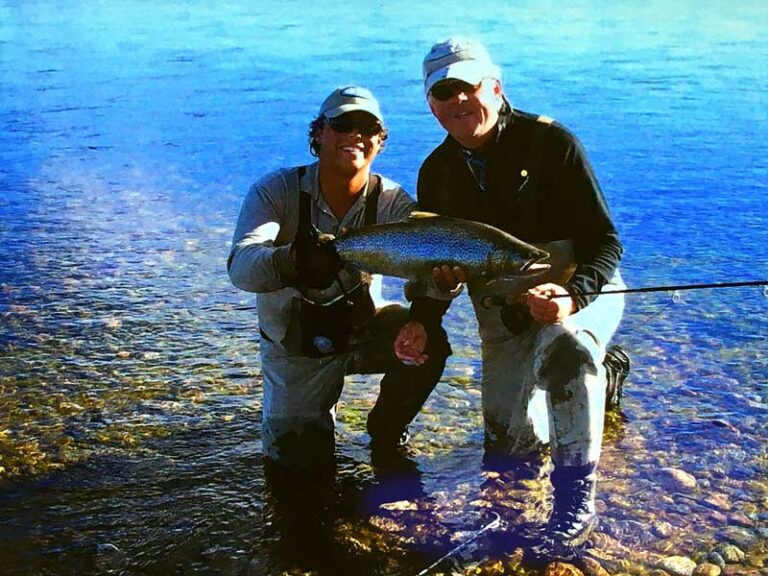
But I had grown up fishing the “Medio” and I knew that being able to understand the nature of a huge tailwater fishery, and the vast aquatic insects that inhabit it, would make it one of the most productive rivers in Patagonia. I could remember years of camping along the river and witnessing massive mayfly and caddies hatches and many successful days with dry flies. Combined with the famous migrations of trophy-class brown trout and rainbows from the deep water of the huge Exequiel Ramos Meija Reservoir, made the middle section of the Limay River a magnet that held my interest.
Beginning in 2003, myself and our core guide team, Gonzalo Flego, Eduardo Dona, Martin Castaneda, and Daniel Etcheverry, started a ten year investment of learning the secrets of the river. As we deciphered the codes of migration in the river, it was apparent that everything culminates around the dependability of the minnow populations and activity. The three native minnow species (pejerrey, puyen, and perca) established themselves when the reservoir was formed over fifty years ago, and their migrations in the river draw the big migratory trout into the river to feed in the summers. It’s this predictable and extraordinary food source that allows the trout to grow larger than many other river systems.
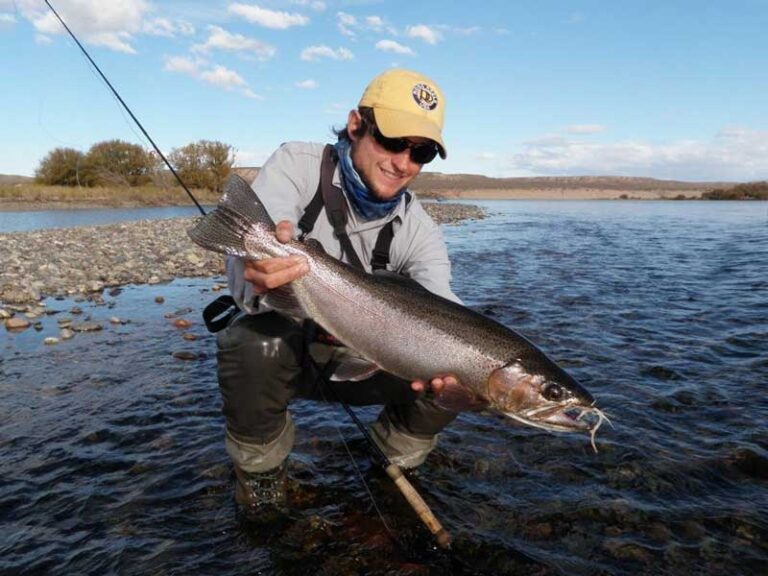
Over the last twenty years we have also discovered that the minnow populations can fluctuate with some unknown balance in the ecosystem, and effect both the number and size of the migratory trout. And as we came to understand the minnow hatches, we also learned to target the large pollution of resident trout that, while abundant and powerful fish, were also more wary and elusive in the crystal clear waters. We developed surface pattern techniques to focus on the trout as they savagely attack “bait balls” of minnows clustered together, and in those years with healthy minnow migrations the Limay River is an unparalleled fishery.
After an extended period of decreasing minnow numbers that began in 2016/17, the fall of 2022 started showing signs of recovering populations. We can now happily say that the Limay is back! Since early January we have seen steady increases in minnow migration activity in sections of the river extending well upstream of the reservoir, and behind those migrations, runs of massive browns and rainbows migrating into the river. We have experienced some incredible journeys on the river this season.
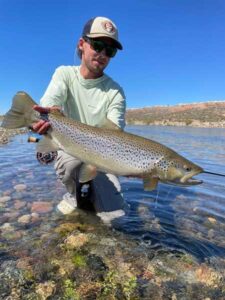
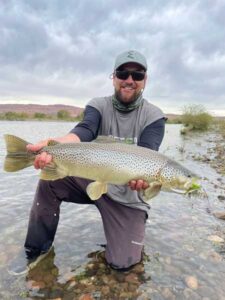
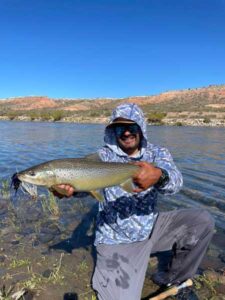
Based on what we know about the balance and the ecosystem, we believe this cycle of abundance of food (minnows) should last for another two to four years. For certain, the next couple of seasons on the Limay will be good, and we invite you to join us for a multiple day float, which makes a great conclusion after a week trip at one of our main trout lodges.
Rates
Have questions about our fly fishing programs or need more information? We’re here to help!
Contact us
Have questions about our fly fishing programs or need more information? We’re here to help!